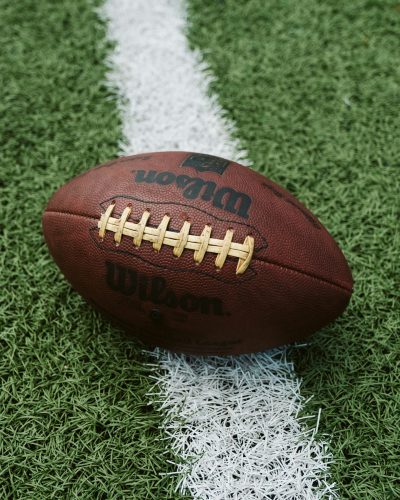
The college football season concluded on Jan. 19, as the Indiana Hoosiers under second-year head coach Curt Cignetti won a 27-21 national championship game against Mario Cristobal’s Miami Hurricanes. The tightly-contested game, and the post-game confrontations, marked the end of a highly anticipated, and highly unusual, college football season. In a season of storylines, here’s what the National Championship has left us wondering about.
The rise of Indiana
Indiana University (IU)’s football program has been a perennial bottom-tier team for nearly its entire existence. Before 2024, they only had three winning seasons in the entire 21st century (one of those being the Covid-shortened 2020 season), did not have a bowl win since 1991 and had more all-time losses than any other team in college football.
That all changed in 2024, when they hired Curt Cignetti, the coach at the surging James Madison University and a former assistant to coaching legend Nick Saban. In his first season at IU in 2024, he led the team to an 11-2 record and a playoff appearance, only losing to the eventual champions and runners-up in Ohio State and Notre Dame, respectively. In year two, Cignetti and Indiana went from contending to dominating, racking up a 16-0 season with wins over defending champions Ohio State, Oregon (twice), Alabama, and Miami. Starting quarterback Fernando Mendoza became the first-ever Heisman Trophy winner in the school’s history, and they won as many postseason games this season (3) as the team had won in their entire history before this year.
Beyond just making school history, the 2025 Hoosiers were an all-time great team. They had the second-highest point differential of any team in CFB since 1956, and they finished in the top 5 in both total offense and total defense, one of only three championship-winning teams in the 21st century to do so, alongside Georgia in 2022 and Clemson in 2018. Their 16-0 season makes them one of only two teams in history with this record, with the other being the 1894 Yale Bulldogs. Whatever the future holds for Indiana, their turnaround in the last two seasons has been remarkable.
The Return of The U
Miami may not have won the title, but they proved that The U is truly back in the national conversation for the first time in over two decades. Miami last won a national championship in 2001, and while they’ve remained competitive in most years, no Miami team has managed to fully recapture the dominance (and the revilement) that Miami held for several decades around the end of the 20th century.
A 13-3 record and wins over Ohio State, Ole Miss, Texas A&M, and historic rival Notre Dame inspire confidence that one of the best college football programs in history might be on the upswing once again. Despite some miscues and a pair of tough losses against SMU and Louisville (losses which cost them a shot at the ACC title game), Miami battled through their season, snuck into the playoffs as the last at-large team, and stormed their way through a string of upsets into the national championship. With many of their key players, including standout freshman receiver Malachi Toney, returning for next season, the Hurricanes are a team to watch in 2026.
The Decline of the SEC
2026’s national championship game marks the third year in a row that no team from the Southeastern Conference (SEC) has made it to the title game. Ole Miss was the only SEC team to make the final 4, while the SEC’s blue bloods in Alabama and Georgia both fell in the quarterfinals. The absence of SEC teams from the finals is historically notable; before 2024’s championship matchup between Michigan and Washington, at least one SEC school had participated in the previous eight title games, winning six of those eight. Across the 21st century so far, the SEC has 14 national championships, with Alabama alone contributing six of those titles and nine total appearances in the championship game.
Time will tell if the SEC has lost its advantage or if this is a mere statistical anomaly. More pressing might be whether the AP poll, the playoff committee, and journalists will adjust their models to account for the SEC’s decline. Thus far, all signs indicate that the CFB world will continue to overhype the SEC no matter what the on-field results look like.
NIL and Increasing Parity
The addition of Name, Image, and Likeness (NIL) payments to the college sports world has massively changed the world of college football. While there have been negative consequences, most notably the massive rise in student transfers in search of higher pay deals, it has permitted historically bad teams to financially recruit higher-quality players by promising them higher NIL deals and greater playing time.
Part of Indiana’s success is likely a direct result of NIL, as the Hoosiers have a large and active alumni and donor network that has helped fund their program into the new era. Meanwhile, teams like Alabama that relied on deep benches and players being willing to stick it out to learn from their coaches have lost much of their power. Talented players deeper on depth charts are now having to consider whether it’s smart to move to a smaller team, become a starter, and get a big NIL payout. With Indiana, a team built out of misfits, transfers, and depth-chart players, taking home the title, expect more players to go hunting for their next big opportunity.