This article initially appeared in a print issue of the Monitor released Oct. 31, 2025.
For as long as cars have existed, there have been people trying to race them. The history of motorsports is long and storied on both sides of the Atlantic, with the Indianapolis 500 defining the very early days of American racing while Le Mans defined European racing. However, the best-known forms of motorsport on each side of the ocean only began in the post-war years. Formula One (F1) began with the Fédération Internationale de l’Automobile (FIA) releasing an official rulebook (or “formula”) for competition in 1946, with the first proper F1 championship taking place in 1950.
No such easy development happened for NASCAR. Where the leading European racing series was built from a history of sports car racing events, the leading American series has its roots in criminal enterprise, smuggling and prohibition. What’s more, NASCAR celebrates this legacy, with a display case at their Hall of Fame containing a whiskey still built by NASCAR legend Junior Johnson. This is the story of how a Constitutional amendment, a few well-designed cars, and some small-town Southerners with a chip on their shoulder produced America’s most popular form of auto racing.
Prohibition
In 1919, the United States passed the 18th Amendment to the Constitution, outlawing the “manufacture, sale, or transportation of” alcoholic beverages. The American temperance movement believed that a ban on the sale of alcohol would improve social relations and public health, and decades of pressure from temperance organizations such as the Anti-Saloon League finally pressured the government into passing the amendment.
With the 18th Amendment coming into effect at the very start of the Roaring Twenties, people across the US immediately started to find ways around the amendment, which proved highly unpopular. The demand for illegal alcohol produced a massively profitable black market. In the North, gangsters like Al Capone grew rich on alcohol smuggling, but the South proved a difficult market for large-scale organized crime to conquer. Instead, the South would find its own source of illicit alcohol in the form of the Moonshiners, and their exploits would become the stuff of legend across an entire region.
Moonshiners and their cars
With alcohol rendered illegal and serious federal effort put towards enforcement, small-time alcohol producers moved their businesses underground, producing whiskey and other spirits at small distillation facilities (or “stills”) under the cover of darkness. This illicit booze, or “moonshine,” would need to be distributed across the county or the state, and for that job the distillers enlisted the help of bootleggers. Often local country boys with plenty of mechanical experience, bootleggers would drive cars full of alcohol from the secret stills down to the towns where it could be quietly sold.
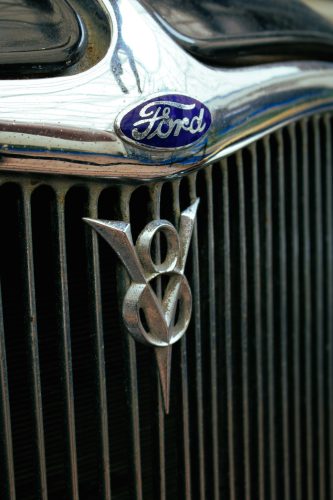
Arguably the most famous bootlegger turned racing star was Robert Glen “Junior” Johnson, who won 50 races as a driver and 132 races as a team owner. Back in 2005, he and his moonshining partner Willie Clay Call were interviewed by Hot Rod magazine, where they described their extensive collection of cars modified for bootlegging exploits. Among this collection were twenty 1940 V8 Ford Coupes, cars that were the backbone of both the late moonshine era and the early days of American stock car racing. Among the most capable small-frame cars of their era, they were sturdy, easy to modify, and most importantly, cheap.
Since bootleggers could easily collect pre-war cars, they could devote their time and resources to upgrading their fleets. The Ford coupe’s V8 engine had plenty of kick, but Johnson and other bootleggers would swap in the most powerful motors they could find, often taken from ambulances. The cars would have their extra seats removed, their floorboards lowered, and their suspensions reinforced, all to carry as much moonshine as possible. With every facet of their cars tuned for performance, and drivers who knew every turn of the country roads and every inch of their car’s abilities, the leading bootleggers made a mockery of the police. Many of them, including Junior Johnson, would view it as a badge of honor that they were never once caught while driving.
Organization and Legalization
National prohibition ended in 1933 with the 21st Amendment, and those states that had their own prohibition laws gradually repealed and restricted them over the coming years. While whiskey-running remained a viable enterprise, especially as it evaded taxes, most moonshiners moved on from the business, and those that did found themselves with a pile of heavily modified and incredibly fast cars and not much to do with them. With no police cars to race against, many of them turned to the next best thing: racing each other.
Moonshiners had already been racing against one another since their inception, but after Prohibition, and especially after World War II, those races went from quiet back-alley affairs to public shows. The abundance of pre-modded cars already tuned for speed meant that racing was cheap and easy entertainment, and communities such as Wilkes County in North Carolina, the home of Junior Johnson, knew about and took pride in the exploits of their local moonshiners. Soon enough, they found themselves racing not for survival or liquor but for profit and bragging rights.
With auto racing booming, an engineer named Bill France seized on the opportunity to not only standardize these races but turn the sport into an empire. France, who ran the Daytona Beach circuit that hosted many of the early stock car races in the post-war era, would hold several meetings with other racing promoters, venue owners, and racers. The result of these meetings would be the National Association for Stock Car Auto Racing, or NASCAR. Under the unified NASCAR banner, tracks and rules underwent standardization, and the scattered races attended by local bootleggers transformed into a legitimate sport.
Even after Bill France created NASCAR and defined the rules of stock car racing, the rebellious instincts that led the bootleggers to break the law in the first place led them to find every possible exploit in the rulebook. Junior Johnson once again led the charge on this front, with his most famous rule-breaker being the infamous “Banana Car”. NASCAR gave Johnson permission to effectively bring whatever car he wanted to help get Ford to return to NASCAR, and Johnson took full advantage, effectively custom-crafting a car from the ground up. The Banana Car would go on to lead for much of its only race before a mechanical failure ended its day, but Junior Johnson’s point was proven.
That same rule-breaking spirit has lived on into modern day NASCAR. Crew chiefs still work tirelessly to find minor rules that they can bend to their advantage, while NASCAR’s inspection process desperately tries to keep a crowd of unruly vagabonds in line. At its core, NASCAR remains a sport of bootleggers pushing their cars to the limit, and the sport’s willingness to celebrate its legally shadowed past is part of what makes it so fascinating.