
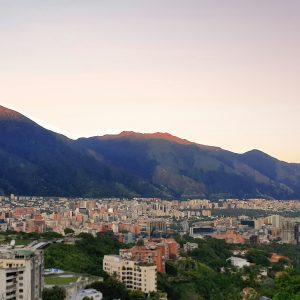
On Jan. 3, 2026, the United States launched a devastating military strike against Venezuela, destroying key military infrastructure and capturing the Venezuelan president, Nicolás Maduro, along with his wife Cilia Flores. Maduro was brought to the United States, where he was arraigned on federal charges of narco-terrorism and mass scale corruption, charges first levied in 2020. With nearly two months having elapsed and the current state of Venezuela having largely fallen out of the news cycle, it’s worth looking back at the Venezuela story and seeing how things have progressed.
Maduro’s court case
The first few days after Maduro’s capture were a flurry of court activity, with his official arraignment taking place on January 5th, less than three days after his capture. The Department of Justice alleges that Maduro has engaged in a cocaine-trafficking conspiracy, including working with several cartels that the Trump administration designated as foreign terrorist organizations. The charges also include weapons-related charges around Maduro’s alleged use of illicitly obtained weaponry. The indictment also charged four other members of the Venezuelan government, none of whom were apprehended during the strike on Jan. 3.
Maduro and Flores pleaded not guilty on all counts, with Maduro claiming that he is “a decent man” who is still the Venezuelan president (a position that the Venezuelan government has not yet revoked) and that he is a “prisoner of war.” Lawyers for the couple acknowledged that Maduro and Flores were in good spirits given the circumstances and that there was a long way to go in the case.
However, now that legal proceedings are underway, progress on the case has slowed. After their initial arraignment, their next hearing is set for March 17th, and neither Maduro nor his wife has tried to set bail. The most noteworthy development in recent weeks is that Argentina has requested Maduro’s extradition, with Argentinian authorities hoping to try Maduro on charges of crimes against humanity and human rights violations. While Argentina and the US have an extradition treaty, it’s unlikely that an extradition will happen, especially with Maduro already awaiting a trial in the United States.
Venezuela’s political developments
With Maduro de facto removed from power, leadership in Venezuela has passed to his second-in-command Delcy Rodríguez, who was sworn in as acting president on Jan. 5. The Venezuelan government remains under the control of Maduro’s United Socialist Party, and notable opposition leaders, including Nobel Peace Prize winner Marina Corina Machado, remain either in exile or out of power despite attempts to curry favor with the Trump administration.
On the American side, the operation to remove Maduro was spearheaded by Secretary of State Marco Rubio. Rubio has long desired the removal of several left-wing authoritarian regimes from Latin America, including that of Maduro. Since Maduro’s removal, Rubio has overseen building American relations with Rodríguez and steering the Venezuelan government towards friendlier relations with America and American business interests. Energy Secretary Chris Wright has likewise played a key role in developing a plan around Venezuela’s oil industry, attempting to coordinate new investment from major firms such as Chevron and ExxonMobil.
Maduro’s removal has not changed much about the leadership of Venezuela, but new political pressures from the United States have produced some movement in Venezuelan policy, including a new amnesty law for political prisoners. Pushed through by Rodríguez, the amnesty law would release prisoners jailed for political crimes, though not those imprisoned on charges of homicide, corruption or drug offenses. The President of Venezuela’s National Assembly confirmed that over fifteen hundred applications for amnesty have been received under the new law, while critics of the law argue that the exceptions for certain offenses, particularly corruption, permit the Venezuelan state to keep key opposition figures jailed.
Following the Oil Money
In the immediate aftermath of the Jan. 3 raid, the fate of Venezuela’s massive oil reserves became a key question. Trump rapidly declared that the United States would be seizing Venezuelan oil reserves, with Venezuela turning over 50 million barrels of oil to the US. Trump asserted on a Truth Social post that he would control any proceeds from the sale of Venezuelan oil, and that he would use it to “benefit the people of Venezuela and the United States.”
According to numerous reports, the Trump administration sent half a billion dollars in proceeds from oil sales into a Qatari bank account controlled by the US government. This proposal generated significant backlash, and the administration has since pivoted. Secretary Wright announced at a press conference on Feb. 13 that the money from the Venezuelan oil sales will now be sent to a newly formed account at the U.S. Treasury. Wright, speaking from Venezuela at a joint conference with interim president Rodríguez, further announced that sales of Venezuelan oil had exceeded $1 billion since Maduro’s abduction, and that an additional $5 billion of sales are expected in the coming months.Democrats and outside observers have been sharply critical of the handling of both Venezuelan oil reserves and the proceeds from their sale. Democratic lawmakers have pressured the Trump administration to provide more information on how oil proceeds, particularly those that have been routed through Qatar, have been used. The administration’s own handling of the funds has been largely unexplained, and this lack of transparency is a significant worry for the future both of Venezuela and of trust in the US government.